Delhi Biker Dies in Open DJB Pit: Civic Negligence & Pune IT Deaths | Khabar For You
- DIVYA MOHAN MEHRA
- 06 Feb, 2026
- 99780

Email:-DMM@khabarforyou.com
Instagram:-@thedivyamehra


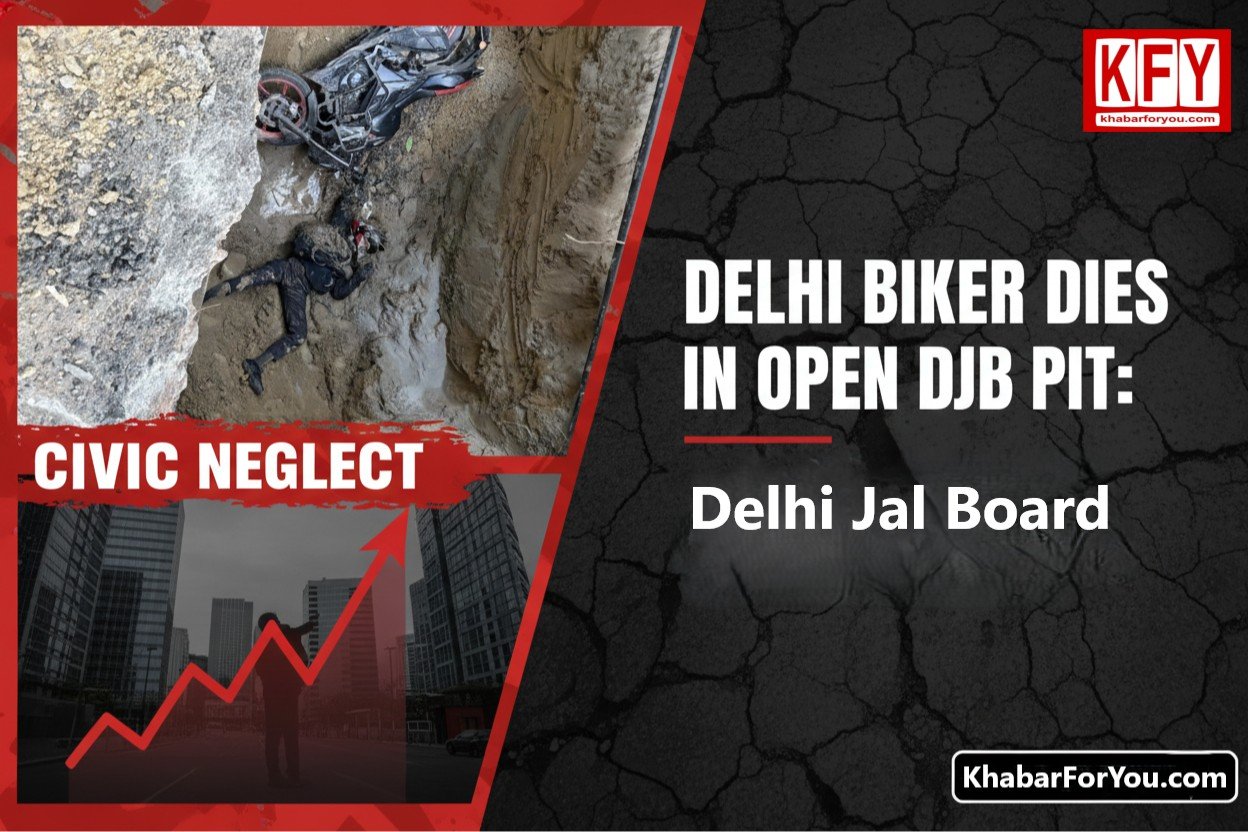
NEW DELHI - In a haunting recapitulation of civic apathy that has come to define the national capital’s infrastructure, a 25-year-old bank employee, Kamal, met a tragic end on Friday morning after falling into an open Delhi Jal Board (DJB) pit in West Delhi’s Janakpuri. The incident, which occurred as Kamal was returning from his night shift at an HDFC Bank call centre in Rohini, has ignited a firestorm of public outrage and political finger-pointing, exposing the lethal "pothole culture" of Delhi-NCR.
Read More - India Rejects Trump’s Russian Oil Halt Claim: Energy Security Over Trade Deals | Khabar For You
The Incident: A Night of Frantic Searching and Police Apathy
Kamal, a resident of Kailashpuri, was just 15 minutes away from home when he disappeared. His family, who remained in constant contact with him during his commute, grew frantic when his phone suddenly went unreachable around midnight.
According to his relatives, they spent the next seven hours knocking on the doors of at least six police stations—including Janakpuri, Sagarpur, and Vikaspuri - only to be met with bureaucratic indifference. “We were told our complaint would not even be registered before 11:00 AM,” a distraught friend told reporters. It was only at 7:30 AM on Friday that the family received a call from Kamal’s own phone; it was the police informing them that his body, still wearing a helmet, had been found submerged in a 20-foot-deep pit along with his motorcycle.
Suspensions and Accountability: The Official Response
In the immediate aftermath of the tragedy, the Delhi government ordered a high-level probe. While early reports from the Delhi Jal Board CEO’s office indicated a massive internal audit and "fresh instructions" for safety compliance, the specific number of official suspensions remains a point of contention.
As of Friday afternoon, the Delhi Jal Board has issued a directive stating that the concerned Junior Engineer (JE) and Assistant Engineer (AE) of the project will be held directly responsible for the lack of barricading and warning signs. While formal suspension orders for these specific individuals are being processed following the Minister’s site inspection, the CEO has mandated that a "compliance report" with photographic evidence from every ongoing site in Delhi be submitted within 24 hours to prevent further casualties.
A Deadly Trend: Civic Negligence in Delhi-NCR
Kamal’s death is not an isolated tragedy but part of a grim, accelerating trend across the National Capital Region. Just weeks prior, 27-year-old software engineer Yuvraj Mehta died in Noida’s Sector 150 after his SUV plunged into an unmarked, waterlogged excavation during dense fog. Mehta survived the initial fall and pleaded for help for 90 minutes while his father stood helplessly on the road above, unable to locate him in the zero-visibility conditions.
The link between these deaths is a systemic failure in "Safety Protocol 101." Investigations into recent fatalities in Delhi, Noida, and Gurugram reveal a common thread:
Invisible Hazards: Construction pits are frequently left without reflector tapes, LED blinkers, or proper barricading.
Jurisdictional Disputes: Often, agencies like the PWD and DJB engage in "blame games" over who is responsible for a specific stretch of road, leaving hazardous zones unattended for months.
Monsoon and Fog Vulnerability: Infrastructure that is merely "risky" during the day becomes "lethal" at night or during adverse weather due to inadequate lighting.
The Pune Connection: A Crisis of Mental Health and Stress
While Delhi grapples with physical infrastructure failures, Pune’s startup and IT hub has been rocked by a different kind of "negligence" - the neglect of professional well-being.
The city recently mourned the loss of a young entrepreneur and several high-ranking IT professionals, highlighting a disturbing trend of sudden deaths in the corporate sector. The most prominent cause of death cited in these cases is cardiac arrest triggered by high-stress environments, followed by a spike in suicides among young engineers.
Most notably, Piyush Ashok Kavade, a 23-year-old IT engineer at Atlas Copco, leaped from the seventh floor of his office building in Hinjewadi. His suicide note, which simply stated "I have failed in life," has become a symbol of the crushing pressure within the industry. Similarly, the sudden passing of Amit Banerji, founder of Table Space, at age 45 due to a heart attack, has underscored the physical toll of the "hustle culture" prevalent in Pune’s business landscape.
Editorial View: A City of Traps
Whether it is the literal "killer pits" of Janakpuri or the "metaphorical pits" of corporate burnout in Pune, the Indian middle class is increasingly finding itself navigating a landscape where safety - both physical and psychological - is an afterthought. Until accountability moves beyond temporary suspensions and into the realm of criminal liability for "civic murder," the families of men like Kamal will continue to wait through the night for a return that never happens.
Business, Sports, Lifestyle ,Politics ,Entertainment ,Technology ,National ,World ,Travel ,Editorial and Article में सबसे बड़ी समाचार कहानियों के शीर्ष पर बने रहने के लिए, हमारे subscriber-to-our-newsletter khabarforyou.com पर बॉटम लाइन पर साइन अप करें। |
| यदि आपके या आपके किसी जानने वाले के पास प्रकाशित करने के लिए कोई समाचार है, तो इस हेल्पलाइन पर कॉल करें या व्हाट्सअप करें: 8502024040 |
#KFY #KFYNEWS #KHABARFORYOU #WORLDNEWS
नवीनतम PODCAST सुनें, केवल The FM Yours पर
Click for more trending Khabar
Leave a Reply
Your email address will not be published. Required fields are marked *
Search
Category